


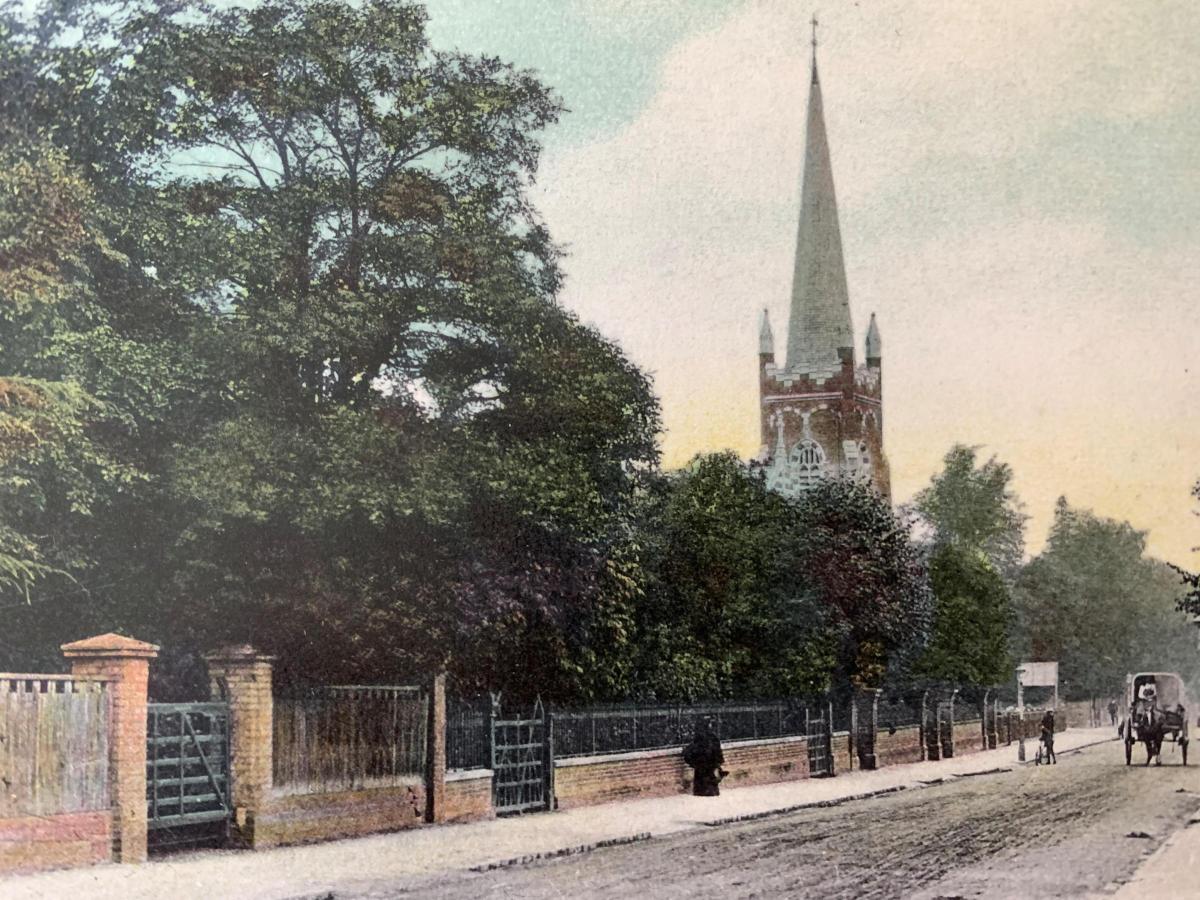

Clarendon Road in Watford was cut through the grounds of Watford House in 1864 between the property and a malthouse. The latter was connected to an 18th century brewery in Stanmore owned by the Clutterbuck family. Several decades earlier, Robert Clutterbuck, author of the three-volume The History and Antiquities of the County of Hertford, had resided at Watford House; his father Thomas' estate. The gardens extended to the land on which Watford Junction Station was built in 1858.
Known in Victorian times as 'the local Harley Street', the road's substantial residences, several with tennis courts, were home to a number of well-heeled doctors and dentists. Impeccably dressed in dark suits and top hats, the doctors drove out in horse-drawn carriages to tend to their patients.

Such Clarendon Road house names as The Lawn, Wansford House, Melton Lodge and Belmont have long been relegated to the history books but, for many, Clarendon Lodge at 36 Clarendon Road, originally on the corner of Gartlet Road, remains a not-so-distant memory.
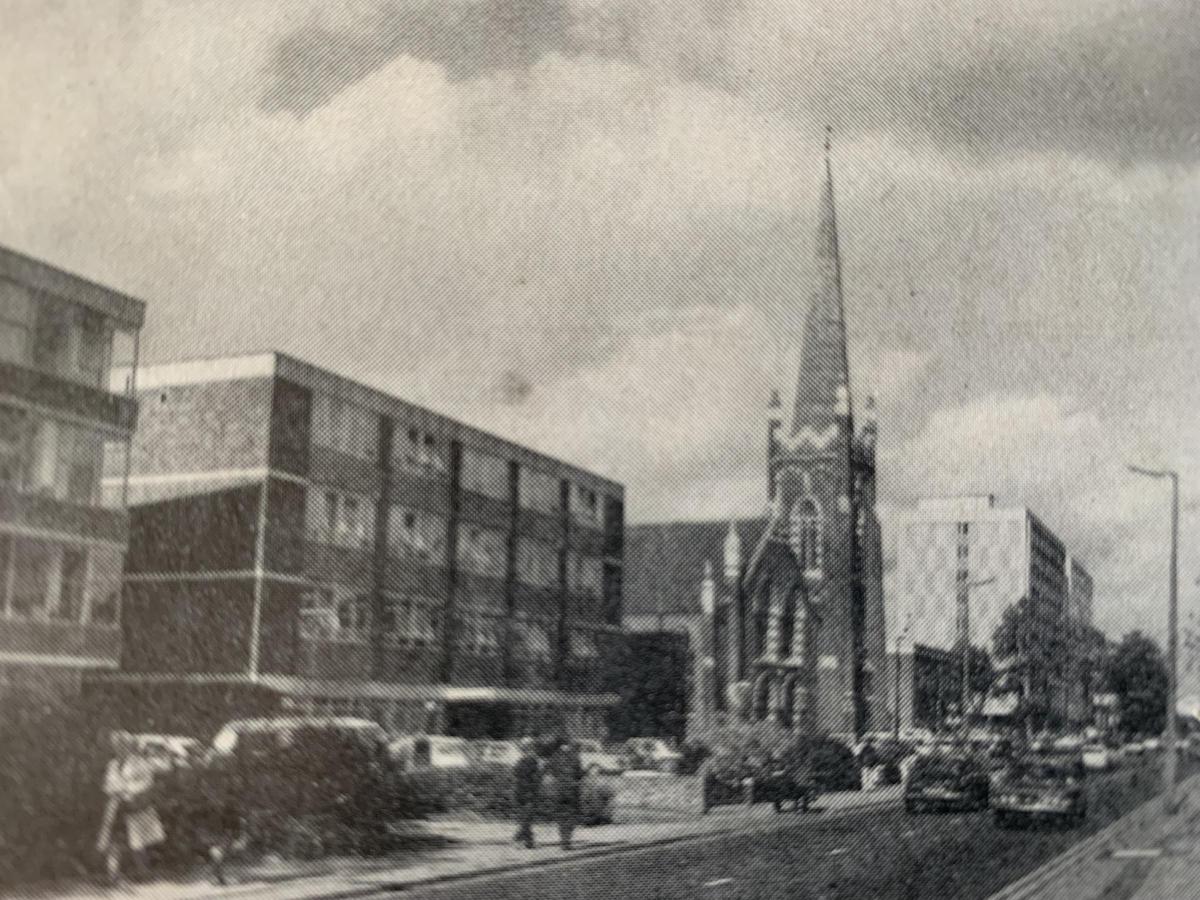
The well-to-do Victorian residents, the first of whom were presented with free railway season tickets, attended churches at both ends of Clarendon Road. Beechen Grove Baptist Church, built in 1877, still stands proud at what is now the junction of the one-way system. Watford Congregational Church, opened in 1904 on the corner of St John's Road, survived 70 years before being demolished. Near the middle of Clarendon Road, St Stephen's Presbyterian Church, initially housed in an iron building and later built as a permanent structure, was diagonally opposite the Congregational church.

Gartlet School, which gave the road off Clarendon Road its name, moved in 1948 to Baynards in Nascot Wood Road (later Watford School of Music and now Harmonia Court), at which time the old school building was demolished. Actor Kim Peacock of the Paul Temple BBC radio series and son of Charles Peacock, proprietor of the Watford Observer, was a pupil.
Built in 1865, Clarendon Lodge became the home of Sir Dennis Herbert, Member of Parliament for Watford and, between 1931 and 1943, Deputy Speaker of the House of Commons. Baron Hemingford, as he was later titled, lived in the house until 1943. It subsequently became Watford Registry Office, sealing the marriages and fate of many Watfordians. But despite being locally listed, the house was razed to the ground by the council in 2015. Hemingford Court, a modern apartment block with an address in Gartlet Road, now stands in its place.

In the road’s early days, residents were advised to close their front gates on Fridays as cattle were herded that day from Watford Junction Station to Fisher's the butchers in Market Place. Wealthy meat salesman Percy Fisher owned a spacious house and grounds in Clarendon Road that were to become the site for Watford's Magistrates' Court and the Police Station to the rear in Shady Lane. Some years before, he had purchased land known as the Rose & Crown meadow from Merton College, Oxford, which he split into plots. By opening access next to the Rose & Crown public house, he created Market Street, Percy Road, and Francis Road; the latter two streets named after his sons.
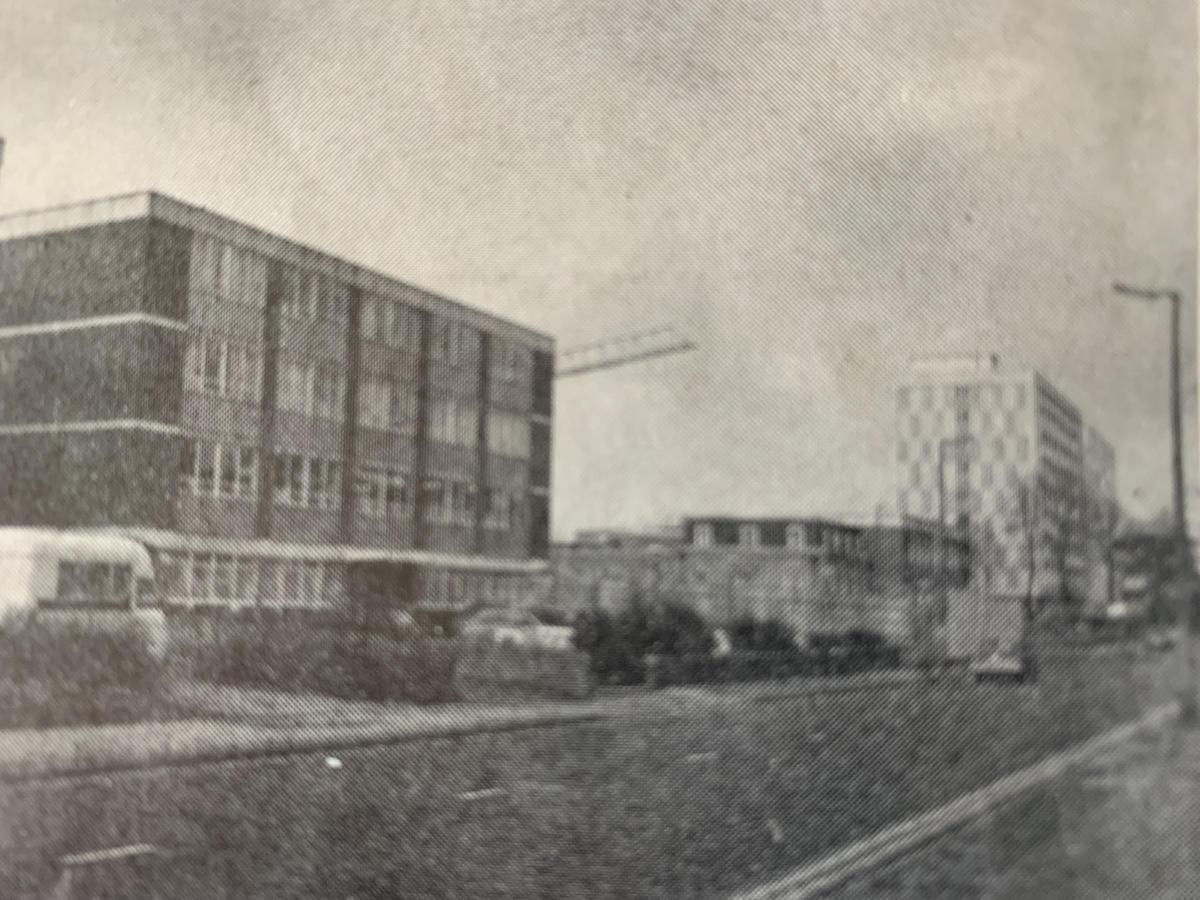
But time moves relentlessly on. The Watford County Court and Family Court have since been relocated to King Street and the Police Station to George Street. Four mixed-use high-rise blocks will replace the court and police station; the latest additions to the road that was once home to sedate residences.
Easily visible to the Victorian residents of Clarendon Road was the substantial Clarendon Hall, located to the side of Beechen Grove Baptist Church. Originally used for lantern lectures, mission gatherings and social events, it became known as the Drill Hall in World War One; the gathering place for the local Territorials.

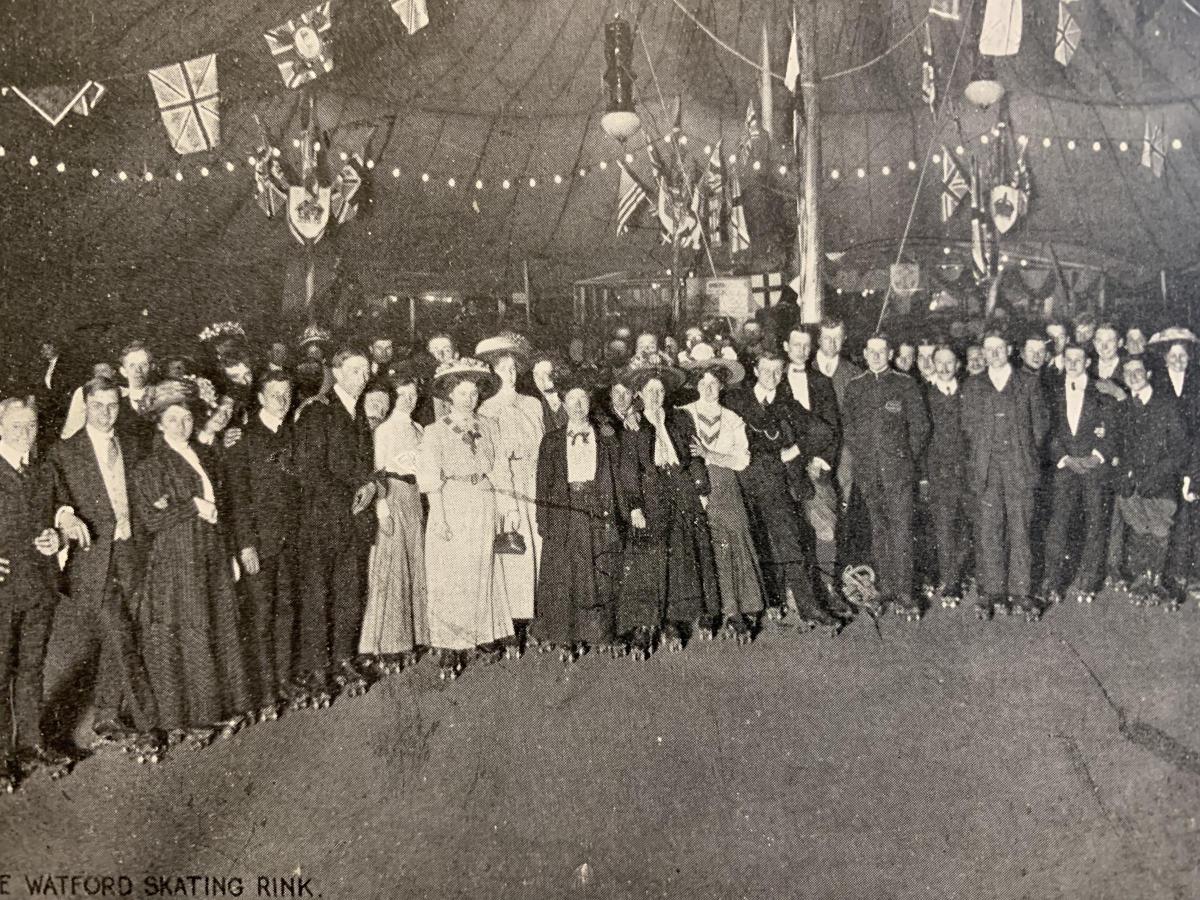
Quality entertainment was on hand in Clarendon Road when Watford Palace Theatre opened in 1908. Two years later, Watford Theatre & Skating Rink Company unveiled a roller-skating rink next door to the theatre. The highly popular activity, which sprung up in the Edwardian era, continued for several years until the numbers of skaters dwindled. They were replaced by dancers in the re-named Palace Ballroom. Then that too closed and made way for The Super Cinema in 1921, later to become the Carlton, which many of us remember well. The Carlton closed in 1980 and was a temporary furniture showroom before being demolished in 1982.
Towards the High Street on the left are four Victorian shops with accommodation above. The first, in the early 1900s, was owned by Leonard Doyle, a scale and weighing machine manufacturer. Opposite the Palace Theatre two mature semi-detached properties surprisingly remain untouched; one a charity shop, the other an estate agent.

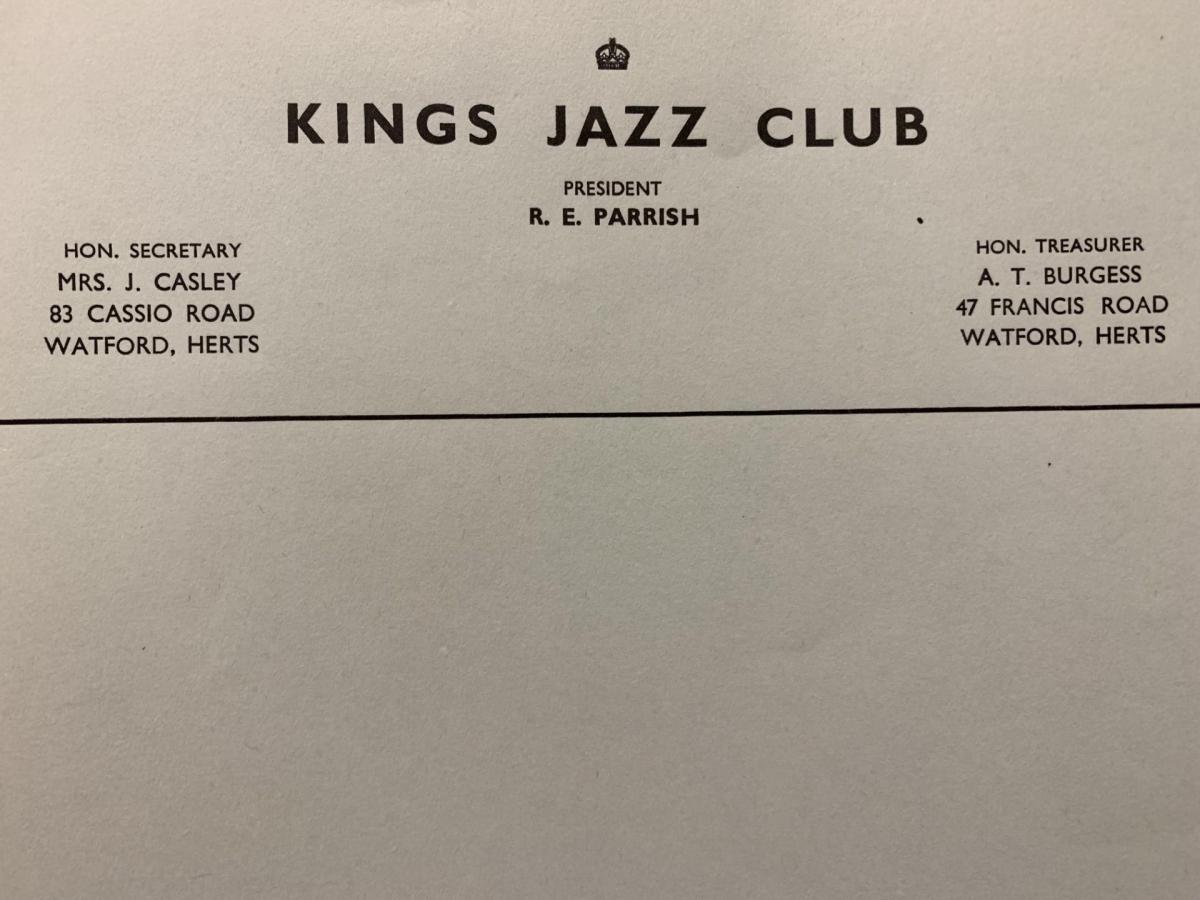
Clarendon Road has special memories for me. Oakley Studios at no. 53 was where my father started his popular Kings Jazz Club in the early 1960s and where I learnt ballroom dancing as a young teenager under the tutorship of Stan Ross.
But today, the multitude of high-rise buildings in Clarendon Road is a world away from its residential origins. Perhaps more than any other in the town, it merits the designation 'The road that changed beyond all recognition'.
- Lesley Dunlop is the daughter of the late Ted Parrish, a well-known local historian and documentary filmmaker. He wrote 96 nostalgic articles for the Evening Post-Echo in 1982-83 which have since been published in Echoes of Old Watford, Bushey & Oxhey, available at www.pastdayspublishing.com and Bushey Museum. Lesley is currently working on Two Lives, Two World Wars, a companion volume that explores her father’s and grandfather’s lives and war experiences, in which Watford, Bushey and Oxhey’s history will take to the stage once again.


Share